Archive for the ‘Stupas’ Category

It was a hot fall day at the Amitabha Stupa

Tuesday, November 1st, 2011

Amitabha StupaIt was a hot fall day at the Amitabha Stupa. The sun glinted off the tigle (teardrop) at the top. Golden wildflowers garlanded the clearing, and chirping birds filled the air, adding their own praises. One Colorado blue bird regularly nose dives for one of the water offering bowls to get a quick drink and then resumes his antics in a nearby pinion pine.

Nearly a dozen KPC members from Sedona gathered to practice the “Shower of Blessings,” a moving, devotional ceremony which, each Saturday afternoon (currently at 4 p.m.) and on ritual holy days, includes a food feast or tsog offering. Often visitors join the practice or share in the food feast at the end. Everyone is welcome.

During the middle of the ceremony, a Sri Lankan family came to the stupa to say some traditional prayers. They had made the trip from California especially for this purpose. After a few moments of silent prayer, the three visitors walked around with candles. They were unlit because of fire restrictions. Although initially disappointed, the family was reassured that imagining them ablaze is considered to be equally effective.  In the Buddhist tradition, visualizing an offering is as potent as making one.

Shower of Blessings TsogDuring the “Shower of Blessings,” visitors kept coming. Some hesitated to walk around the stupa at first, but were warmly greeted and told it is always appropriate to circumambulate a stupa, even if there is a ceremony in progress.

As the sun went behind the red rocks, more people came to meditate and pray. The cooler evenings always bring locals who come to the site to worship. By 6:30 the sun was gone, and the stupa park closed.

October 25 2011 at the Amitabha Stupa

Monday, October 31st, 2011

It is always surprising how much there is to experience in this absolutely still place.  Although the Amitabha Stupa and Peace Park is in the heart of West Sedona and readily accessible, it seems very much removed from daily life. The 14-acre parcel of land is studded with arroyos, pinions, junipers, brush and cacti, as well as abundant wild life that either live on the land or pass through—from quails and ravens to the occasional meandering coyote.  In the center of this bounty, stands the stupa.

242304053_o2oXi-S

With so much to see, it’s no wonder that hikers come through the land as well (one day last week there were two groups of 25 people in addition to many individual hikers), and tour guides often bring visitors to experience the extraordinary beauty and calm energy. The stupa has even been dubbed “an unofficial vortex” by Sedonans.

As spectacular as the scenery is, it is secondary to the spiritual refuge that this sacred land provides. People come from all over the world to connect with the power and goodness of the stupa, often leaving offerings of personal meaning in addition to contributions to the upkeep of the land in designated offering boxes. One day it might be conch shells, a rose quartz, a red toad with a quarter in its mouth, a friendship ring and an American Indian sage bundle. At another time it might be silk flowers, cylindrical metal chimes, a clear jar of blood-red heart stones, a ceramic egg, a wooden cross, a black and yellow toy car and a Buzz Lightyear figurine.

A few years ago someone left a song of peace, which ended with “Feel the wind of love increase, as we move this world to peace. Come love the world with me.” A few months ago, a grieving son and daughter left a carved bird for a father who just passed away (he had spent many hours on the land bird-watching); and the other day, a Japanese visitor left a letter to her half brother, whom she had never met. She assured him that “nothing is your fault. … You are an heir of love, remember that. … My prayers are with you.”

People of all spiritual traditions are drawn to the stupa. It is a place where one can feel safely at peace and where the mind can experience stillness, hope, inspiration and love. It is a place to keep one’s spirits up during difficult times and a place to pray for those who are suffering. During times of world crisis, many people are drawn to the stupa to pray. This movement of consciousness from the particular to the general comes naturally at the stupa where the mind seems to expand easily and embrace all of life.

633642315_j6eeN-S

Friday, September 24th, 2010

The lowing of the conch shell sounded from various points the temple grounds like a soft foghorn. It overlaid the patter of hammers as stupa construction continued. Sometimes the sound wavered and spluttered out, and Jetsunma would laugh, lowering the conch. She was practicing for the enthronement ceremony the following day and had been told at the last minute that she would have to blow the conch. She never had before, at least not in this lifetime. She wiped her mouth and joked to her students, “I’m never going to get this down.”

She gamely tried again, continuing her gradual circumambulation of the temple. The sound came out clear and strong and hung in the air. After a moment of stillness, the students cheered.

On September 24, 1988, the temple filled with cameras and mics angled in every direction. Jetsunma sat quietly humble on the throne, and straightened the brocades draped over her shoulders, blinking at the lights. The temple had never been so brightly lit. To the blare of Tibetan horns and ringing bells, NBC filmed while His Holiness Penor Rinpoche, Throne Holder to the Palyul Lineage of the Nyingma School of Vajrayana Buddhism, formally enthroned Jetsunma Ahkon Lhamo as a tulku, or reincarnate teacher.

According to tradition, ceremonial items were carried from H.H. Penor Rinpoche to Jetsunma, empowering her to teach and formally represent the Palyul Lineage. When the time came for her to blow the conch on camera, the sound came clear and then wavered. Not as good as the night before. She shared a wry smile with her students, tipping her head, Oh, well. Then one of the monks had to blow the conch. His Holiness chuckled and Gyaltrul Rinpoche translated his comment, ”They should have had Jetsunma do it.”

The news spread via Associated Press, and world newspapers printed photos of the spectacle of a western woman with long dark hair on a Tibetan throne. Her enthronement came at a time when Vajrayana Buddhism was relatively unknown in the US. The year before, an obscure Tibetan monk, H.H. the Dalai Lama, spoke at the National Cathedral to a scattered audience of about a hundred. At Buddhist temples in the late 1980s, teachers were universally Asian.

It was openly questioned whether Westerners could accomplish this Eastern religion.

H.H. Penor Rinpoche, who never shirked what was needed, answered with a resounding “Yes.” As he enthroned her, he said, “People have asked me why there are no American tulkus. And people have asked me why there are no female Lamas. Now you have both. So you should be very happy.”

“This is for you,” Jetsunma said later to her students. “It’s for all of us really. This is your own enthronement, your own future accomplishment that you’re seeing.” She explained that the enthronement meant that not only can Dharma be accomplished, it can be accomplished by Westerners, even in this day and age. “Yes, even you.” And she wrinkled her nose impishly at her students, and laughed.

Walk for Those Who Can’t

Sunday, June 6th, 2010

Stupa Walk Art2-webKPC is in a thank you mode! In a posture of giving back to the community, we will hold a “Walk for Those Who Can’t” on Saturday, June 12, from 9 a.m. to 1 p.m.


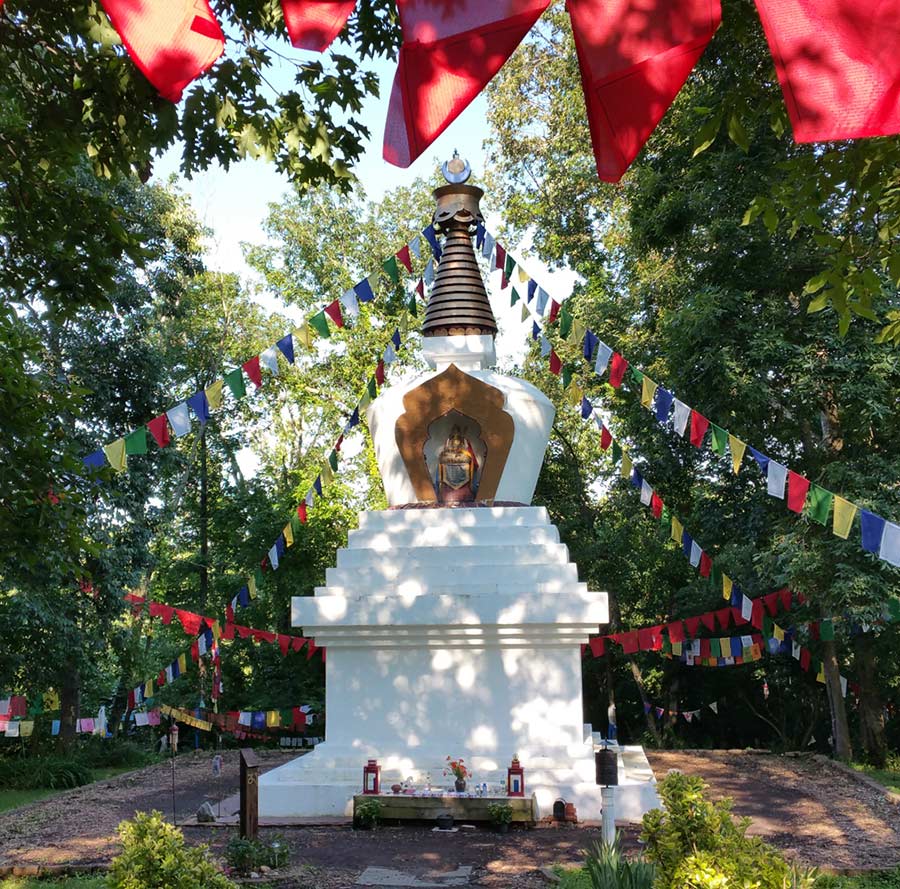
Members (and friends) of the KPC community will spend four hours in continuous relays of prayer around the Enlightenment Stupa (the one closest to the temple). The idea is to walk for those who can’t circumambulate–either because of distance, health, or ignorance of the opportunity.


We will do a continuous reading of the names given us to pray for, including those already in our prayer book, and each one of the donors who gave in our recent appeal to save the tempe. We invite you to submit names as well (no intentions, please, as they can increase the length of an already lengthy process). You can submit names by writing to kpcprayerwalk@gmail.com.


Lunch will be available for a nominal fee at the end of the event, courtesy of the Burmese American Collective. The Burmese-American community will be featured this year in the Smithsonian Folklife Festival, and members are raising money to support the performers. KPC is delighted to support this community, who have supported us in many ways, especially during our recent emergency appeal!


Happy New Year!

Thursday, February 18th, 2010

Happy New Year!

tigers_licks_two_cubs

February 14 began Losar, the Tibetan New Year, the Year of the Tiger. Look forward to a year with a heart, because this Losar falls on our Western Valentine’s Day!

So open your heart to the opportunity in front of you! Losar inaugurates a period of 15 days during which spiritual potency is considered to be multiplied 100,000 times.

We hope that the virtual practices below will help you make use of this auspicious period. Share your love and make it grow!

Amitaba Practice

Long Life Prayer for Jetsunma Ahkon Lhamo

Virtual Circumambulation

Snowed In

Sunday, December 20th, 2009

This is what it looked like yesterday at KPC during the Great Blizzard of 2009.

Temple in the Snow

Beginning Friday evening, the snow was unrelenting until late Saturday night. It fell fine and fast, with a pretty good wind behind it at times.

You can see in the picture below what the flags are doing!

Blowing up a storm

The stupa is barely visible . . .

Stupa covered with snow

. . . and every bush is wearing its own snow-cone extension!

Firethorn bushes with snow mounds

The bird feeders are too. The winged ones are having a hard time finding food!

Bird Feeders with Snow

Ani Palmo went out to clear the bird feeders and fill them with birdseed.

Ani Palmo with peanut-butter cone

Bird feeders and snow driftsNow at last the birds can find a footing, and some food. That’s a peanut-butter pine cone she’s waving around in her right hand:  an easy way to get some nutrition out to them.  (That’s right–it’s just what it sounds like!  Ani Palmo scattering breadYou smear peanut butter on a pine cone.)  And she took some bread crusts out too, tossing them in a place with some protection from the snow.

At midafternoon, 15 inches of snow had fallen, and it was still coming down.

Ani Pema's tracksOne of the other nuns, Ani Pema, had to make her way down to the Garuda Aviary (our parrot sactuary) to tend to the birds. The photographer missed Ani-la on her trek–but here’s her trail.

We caught up with Ani Pema later, warm and dry, inside the temple.

Ani Pema warm and dry

Meanwhile, the 24 Hour Prayer Vigil, the heart of our activity at KPC, continues, with the residents tag-teaming on shifts.  Ani Pema did a double shift earlier in the day, four hours.  Gonpo arriving for his prayer shiftHere’s Gonpo, arriving from elsewhere on the property, to take a late-afternoon shift.

Here comes helpYou can see how the snow is piling up!  It seems we are completely cut off from the outside world.  But wait–here comes help!  The cavalry!  Our neighbor with a bobcat.

It was such a beautiful sight, we think we want to show more of it.  After all, plowing means that YOU can get here!

Snow plow

By the way, you can sponsor the Prayer Vigil and dedicate your support to a loved one or a cherished cause.  Click here to learn more about Prayer Without Ceasing.

A Holy Visit

Thursday, November 19th, 2009

Having His Holiness Karma Kuchen Rinpoche on the throne at KPC reminded us all of his predecessor–and our mutual teacher–His Holiness Penor Rinpoche.  (Karma Kuchen Rinpoche was raised as his heart son.)

HHKKR with picture of HHPR

That is Penor Rinpoche’s picture behind him, with the light beautifully reflecting as if from his heart.  In fact, seeing Karma Kuchen Rinpoche on the throne felt like being with Penor Rinpoche as a young man.  As Jetsunma Ahkon Lhamo, KPC Spiritual Director, remarked, His Holiness seemed to have “mixed his mind with that of Penor Rinpoche.”

monks with long hornsHis Holiness offered four empowerments:  Guru Rinpoche (or Precious Teacher), Vajrakilaya (wrathful remover of spiritual obstacles), Dorje Phagmo (the feminine mind of enlightenment), and Amitayus (Buddha of Long Life).  Here two Palyul monks, accomplished musicians, blow the long horns to signal the point at which the empowerment is transferred to those present.

People approached the throne to receive the blessings and empowerment substances.

HHKKR ppl approach throne 2009

Jetsunma was able to visit extensively with His Holiness.  Here they are, preparing to sit down for a long discussion.

HHKKR and JAL at KPC 2009

HHKKR with crystal stupa 1His Holiness was very pleased with a gift that Jetsunma brought:  an empowered miniature stupa with a crystal  bhumpa .  The crystal contained a precious relic, carefully sealed inside.

When His Holiness asked to see the relic, Ani Dawa, who had sealed the stupa herself, started to tell him that it wasn’t possible.

“It’s permanently sealed . . .” she started to explain, then, seeing that it had yielded immediately to his hand, she trailed off,

“ . . . or not.”

HHKKR with crystal stupa 2

His Holiness easily and securely re-assembled the stupa once he had looked inside.

The incident reminded observers of a story told about his predecessor, Penor Rinpoche, as a child.  He is said to have dropped an ancient, sacred vajra (a ritual instrument) and broken it.  Appalled, he quickly applied saliva to stick the parts together again—and successfully mended it!

Speaking of young people, they also came to visit.  Elizabeth and Riley were running a bake sale for the benefit of the Garuda Aviary, to which they are devoted.  They offered the first cupcake (it was the first one–right, girls?) to His Holiness, who seemed very pleased.

HHKKR with cupcakes

Not to be left out of the gift action, photographer Manny Garcia presented a portrait he had crafted of His Holiness.  (One of Manny’s photos of then-candidate Barak Obama became the basis for the famous “Hope” poster.  Now THIS would make a great poster, wouldn’t  it, Manny?)

HHKKR receives photo from Manny Garcia

HHKKR visit with Manny organizing photo shootAt the end of the empowerments, Manny herded everyone outside for a group photo with His Holiness.

HHKKR visit Ani gets the jokeOf course, some people don’t need to be herded!  We’ve watched Ani Dolma (a former  U.S. Army major, now retired) organize a crowd!  Here she seems bemused by the goings on.  (TEN HUT!)

Finally, everyone was ready, and pictures were snapped.  We particularly like this shot:  look carefully at His Holiness, making the peace sign—and young Robin, in front of him, unconsciously but perfectly framing his gesture with her exuberant arms!  May we always act in such harmony with our teachers!

HHKKR 2009 large image

Purifying Poison

Friday, September 25th, 2009

In commemoration of the 21st anniversary of the enthronement of Jetsunma Ahkon Lhamo on September 24, we are presenting testimonials from Jetsunma’s students about her impact on their lives.  This story is from Claire.

There was a time before we built that Stupa Park when the land was completely wild. It now has the walking paths around it and the Stupas. I am referring to the time before there were any walking trails, any roads, any way in.

One day Jetsunma was on the land with a group of people working with machetes and saws, rakes and shovels, with the goal of cutting perimeter paths to be able to have prayer wheels, meditation gardens and walking trails between them. I don’t remember the month. It was hot and humid and the work was very hard. The growth was dense, full of all sorts of things. We were cutting and transporting the brush to piles to haul off.    

I am crazy allergic to poison ivy. I’ve been so disfigured at some points in my life that I could not believe I would ever look normal again. I have not been able to use my hands….or to even wear clothing…at times because of it.  I know what it looks like….believe me. It was thick, dense and everywhere.

I doubt that Jetsunma will even remember this… She was cutting and hauling and working extremely hard. All of us were working so hard. Cutting, sweating, hauling. Trying to make paths. I had picked up a particularly big bunch of weeds and brush to haul off….and felt kinda sick inside when I looked at it… Pure Poison Ivy. All over me. There was no way with all that oil on me I was going to be able to finish the day, drive the hour home, get out of those clothes  and scrub it all off before it took hold.  So in my mind I am calculating how bad it will be, how much time I have before it starts to get bad….what soaps I have at home….and Jetsunma calls to me.

Claire….I’ve lost an earring.  I’ve got the front and the back but I can’t see to put it back in. Would you put it back in my ear? 

Um. What?

Would you put this earring back into my ear?

Well, I explain, Jetsunma I have poison ivy all over me. I don’t want to touch you. I don’t want to get the oil on you.  

She responds….Here’s the front and here’s the back. Would you just put it into my ear?

I explain…Poison Ivy can be a really bad thing. I can’t put it in your ear without touching you. I really don’t want to give you poison ivy.

Well, if you get poison ivy then I get poison ivy.  Would you please put the earring in?

So we stand there….her holding her head out….me going through probably a hilarious serious of gyrations trying to get a small pierced earring into her ear and put on the back without ever touching her.  I never, ever wanted her to have what I had.

So we keep working. The day winds down. Now…..my mind is on finishing the job and leaving. Jetsunma, after such a long sweaty day, wanted to sit by the stream and rest and talk a bit to everyone who has worked so hard.   I don’t want to leave before she does and so I sit too.  And I wait for the itching to start. I am so prepared for the blisters and the pain.

Nothing. Not one blister. Not one itch. There were many cases of poison ivy from that job….from people who had never had it before even….but not me.

That remains to me a moment that takes my breath away.  


Miracles From Hurricane Katrina

Monday, September 21st, 2009

In commemoration of the 21st anniversary of the enthronement of Jetsunma Ahkon Lhamo on September 24, we are presenting testimonials from Jetsunma’s students about her impact on their lives.

Part 3

There are SO many other incidents of these sublime moments… answers to questions about where to spend my time and efforts, how to proceed on the path, gossamer tastes of the thin line between this reality and another. I recall how Jetsunma encouraged some of us to go down to the Katrina aftermath when I personally was going through the loss of a job – and that experience of the trip to New Orleans was replete with miracles.

From not knowing where we were going to even stay upon arrival, Jetsunma’s guidance lead us to a woman named Katrinna Huggs (yes that was her name, spelled differently than the storm but the coincidence was undeniable) who lived at Bayou de Zairre just above the Lake Poncetrain causeway…We only found her because she had a STUPA in her back yard, and one of our traveling companions kept communicating back to our main temple in Poolesville until we found a phone number to visit this stupa. When we arrived – to ask only if we could see her backyard stupa – she (barely knowing what a stupa or we crazy Buddhists were, or why we wanted to see her stupa) hesitantly agreed to have us stop by and see it.

While she prepared her lunch and offered us a meal – we asked if we could clean the stupa which was in need of some simple upkeep and weeding around its perimeter. As we washed and worked around this image of Buddhahood, making prayers to our lama and dedicating the merit to those who had been hit so hard by this storm… the lama who oversaw the construction of this particular stupa just HAPPENED to call Katrinna to see how it had done in the storm. Katrinna says she had not heard from him in years and was very amazed by the synchronicity that we were cleaning and paying attention to it and she hears from this teacher who she barely knows.

She graciously invited Sam and I to stay there with at least a half dozen people who were en route from Sedona.  In addition, she allowed us to erect a compound in her back yard and bring refugee animals rescued from the aftermath of the Hurricane in New Orleans to be triaged in her backyard.  It was such an amazing time of trusting in our teacher’s instructions (which were frightening as we looked at the destruction and chaos of the area), and that trust lead us to a woman with 4 acres of paradise in the middle of all this destruction and storm fallout.  (Tomorrow – Part 4 – Joy in the midst of Tragedy)


Blessings of the Amitabha Stupa

Wednesday, August 26th, 2009

sd-3640145

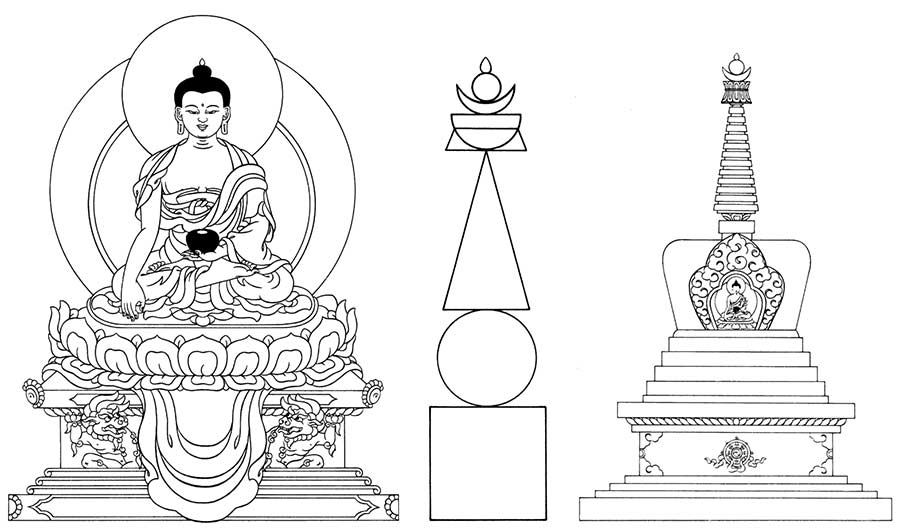
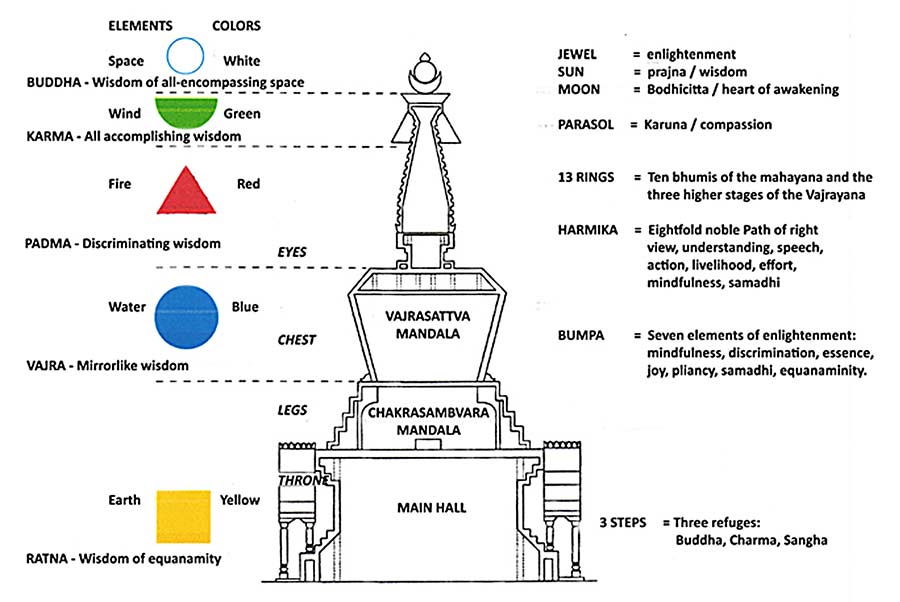
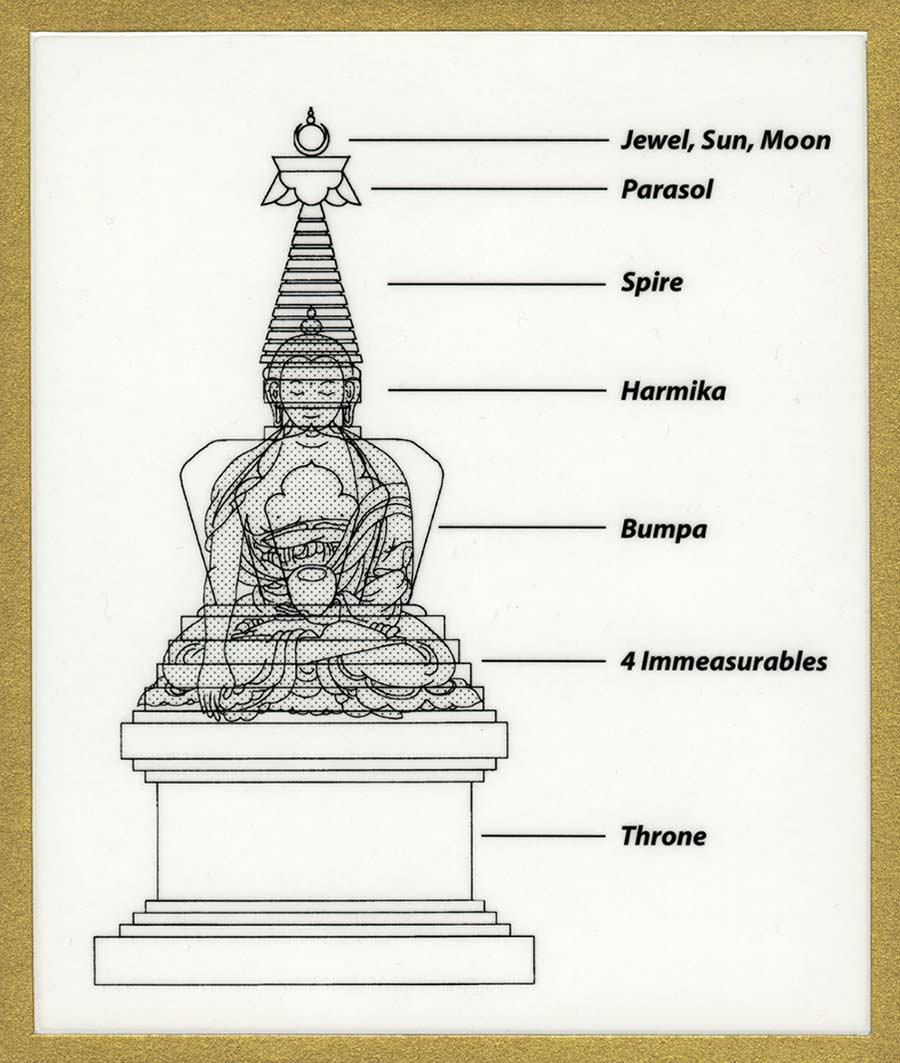
The Amitabha Stupa in Sedona is a place of refuge and Buddhist practice.  A stupa, called a chorten in Tibetan, is a receptacle of offerings and represents the outward expression of the Buddha’s enlightened body, speech and mind. 

According to Tulku Sang Nang, an accomplished Vajrayana master and stupa builder who helped build and consecrate the Amitabha Stupa, “By seeing a stupa or hearing about a stupa, remembering it, visualizing it, whatever the case may be, any kind of connection will imbue you with a blessing, will connect you to enlightenment.  So, whether it is a bug or a human or animal without a body, you know, just floating through space, any being that come in contact with a stupa will be blessed and gain merit.”

Please enjoy the following slideshow of the sagadawa ceremony held at the Amitabha Stupa in June, 2009.